
The Whale as Leviathan
The WhaleThis flow follows the whale’s movement from biblical and classical monster to Melville’s literary leviathan and Hoare’s living animal.
increasing Bearing strength in each event
 decreasing
Bearing strength in each eventdecreasingThe Biblical Giant
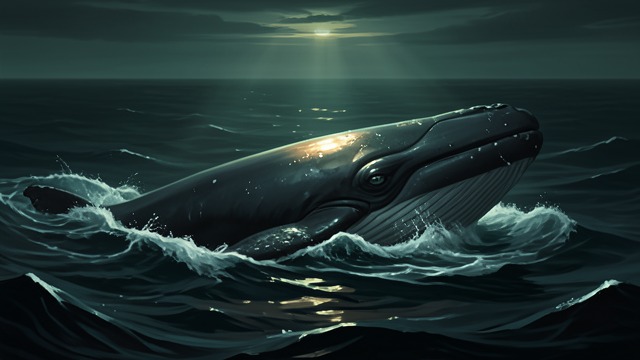
A Creature of the Deep
Swallowed and spared
Stories of Jonah and other traditions imagine a great fish or whale as the agent of danger, rescue, or divine purpose. The sea creature becomes part of a moral and cosmic drama.
A scale beyond people
The whale’s immense body offers a form for forces humans cannot control. Its presence blurs the line between animal, monster, and sign.
The Apocalyptic Animal
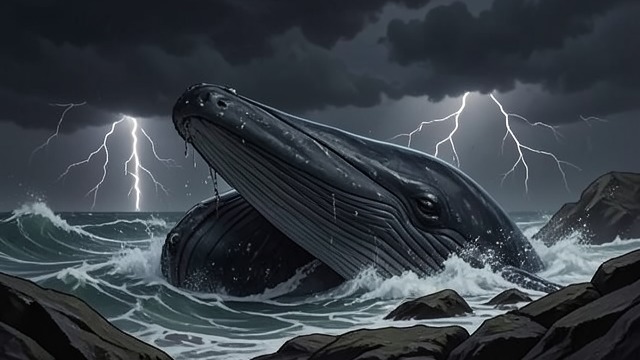
The Whale as Judgment
Fear made visible
Writers and artists associate whales with monsters, catastrophe, and the end of the world. A stranded animal may be treated as a warning from beyond ordinary life.
An enduring image
These traditions shape later readers’ expectations of the whale. The animal’s real body is repeatedly enlarged by inherited symbols.
Melville’s White Whale
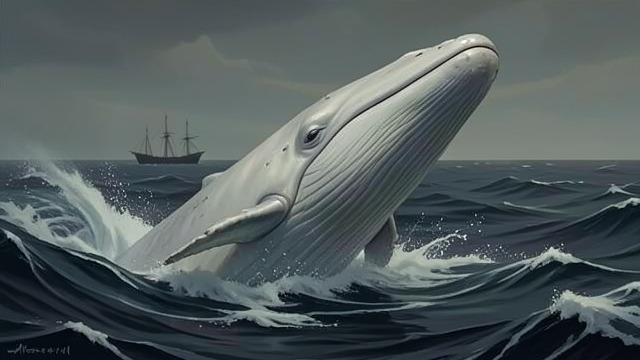
The Leviathan Reimagined
A whale at the center
Moby Dick becomes the object around which Melville gathers fear, metaphysics, politics, and questions of evil. Its meaning changes depending on the characters’ beliefs.
A resistant symbol
The whale can be read as a monster or an animal, but it refuses to settle into one interpretation. Its power lies partly in the uncertainty it generates.
A Modern Public Icon
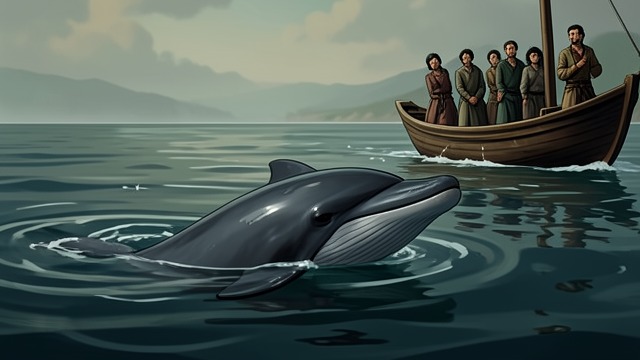
From Monster to Victim
A changed image
Images of living whales and mass industrial kills shift public attention toward whale vulnerability. The old sea monster becomes an emblem of innocence under threat.
A symbolic reversal
The human fear of the whale gives way to concern for what humans have done to it. The change in imagery reflects a change in moral responsibility.
A Living Leviathan
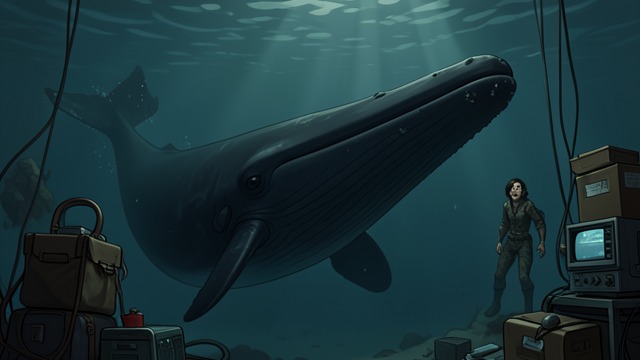
Encountering the Real Animal
An enormous presence
A sperm whale approaches Hoare in deep water and fills his vision with its immense head and slowly moving body. The animal feels almost unreal until its movement confirms its life.
Myth and reality together
Hoare’s experience recalls the old leviathan without reducing the whale to a symbol. The living animal remains more strange than the stories that try to contain it.
In the ancient religious traditions discussed by Hoare
In the religious imagery of early modern Europe
In Moby-Dick, published in 1851
During the twentieth-century conservation movement
During Hoare’s underwater encounter in the Azores
